
Symbiotic Sanctuaries: An Architectural Thesis on Eco-tourism and Regenerative Design
The burgeoning global tourism industry, while a significant economic driver, has left an indelible, often detrimental, mark on the planet. From rampant resource consumption to the displacement of indigenous communities, the conventional tourism model demands a radical re-evaluation. This thesis explores the potential of eco-tourism architecture to transcend the limitations of conventional development, proposing a paradigm shift towards regenerative design that fosters symbiotic relationships between humans and the natural environment.
Eco-tourism, at its core, advocates for responsible travel that conserves natural environments and improves the well-being of local people. However, the architectural manifestation of this ethos often falls short, prioritizing aesthetics over ecological integrity. This thesis aims to bridge this gap, developing a framework for eco-tourism architecture that prioritizes:
Ecological Regeneration: Restoring and enhancing degraded ecosystems through architectural interventions.
The thesis draws upon a multidisciplinary approach, integrating principles from ecological design, permaculture, biomimicry, and social ecology. It moves beyond the prevalent “green building” paradigm, which often focuses on minimizing environmental impact, towards a regenerative model that actively contributes to ecological restoration.
Regenerative Design: A Holistic Approach
Regenerative design considers the interconnectedness of natural and social systems, aiming to create built environments that enhance the vitality of both. It emphasizes:
Circular Economy Principles: Minimizing waste and maximizing resource utilization through closed-loop systems.
Permaculture: Designing for Resilience
Permaculture, a design system inspired by natural ecosystems, provides a framework for creating resilient and self-sustaining landscapes. Its principles, such as working with natural patterns and maximizing biodiversity, can be applied to architectural design to create buildings that function as integral parts of the ecosystem.
Biomimicry: Learning from Nature’s Genius
Biomimicry, the practice of emulating nature’s forms, processes, and systems, offers a wealth of inspiration for sustainable design. By studying how natural organisms adapt to their environment, architects can develop innovative solutions for energy efficiency, water management, and material selection.
Social Ecology: Fostering Community and Collaboration
Social ecology emphasizes the interconnectedness of social and ecological issues, recognizing that environmental degradation is often rooted in social inequality and injustice. Eco-tourism architecture should prioritize community participation and empowerment, ensuring that projects benefit local people and contribute to social well-being.

To inform the development of the architectural framework, the thesis analyzes a range of case studies that exemplify different aspects of eco-tourism architecture. These case studies highlight both successful strategies and potential pitfalls, providing valuable insights for future projects.
The Six Senses Resorts: Luxury with Sustainability
The Six Senses resorts, known for their luxurious accommodations and commitment to sustainability, demonstrate the potential for high-end eco-tourism to minimize its environmental footprint. However, the thesis also examines the potential for such projects to create social and economic disparities if not carefully managed.
The Ecolodge in the Amazon: Community-Based Tourism
Community-based eco-lodges in the Amazon region illustrate the importance of integrating local knowledge and skills into project development. These projects empower indigenous communities, providing them with economic opportunities while preserving their cultural heritage and protecting the rainforest.
The Biosphere Reserves: Integrating Conservation and Development
UNESCO Biosphere Reserves, which aim to balance conservation and development, offer valuable lessons in managing tourism in sensitive ecosystems. The thesis examines how architectural interventions can support the goals of these reserves, such as promoting sustainable agriculture and ecotourism.
The Eden Project: Experiential Learning and Public Engagement
The Eden Project in Cornwall, UK, demonstrates the power of architecture to educate and inspire. Its biomes, which showcase diverse ecosystems, provide a unique learning experience for visitors, fostering a deeper understanding of the natural world.
Based on the theoretical framework and case study analysis, the thesis proposes a comprehensive architectural framework for eco-tourism projects. This framework encompasses a range of principles and strategies, addressing key aspects of design, construction, and operation.
Site Selection and Planning: Respecting the Ecosystem
Conduct thorough ecological assessments to identify sensitive areas and avoid habitat disruption.
Building Design and Materials: Embracing Local Resources
Use locally sourced, renewable, and biodegradable materials, minimizing embodied energy and transportation costs.
Energy and Water Management: Closing the Loop
Implement renewable energy systems, such as solar, wind, and biomass, to reduce reliance on fossil fuels.
Community Engagement and Empowerment: Building Partnerships
Engage local communities in all stages of the project, from planning and design to construction and operation.
Experiential Learning and Interpretation: Fostering Connection
Design spaces that facilitate interaction with nature, such as observation decks, nature trails, and outdoor classrooms.
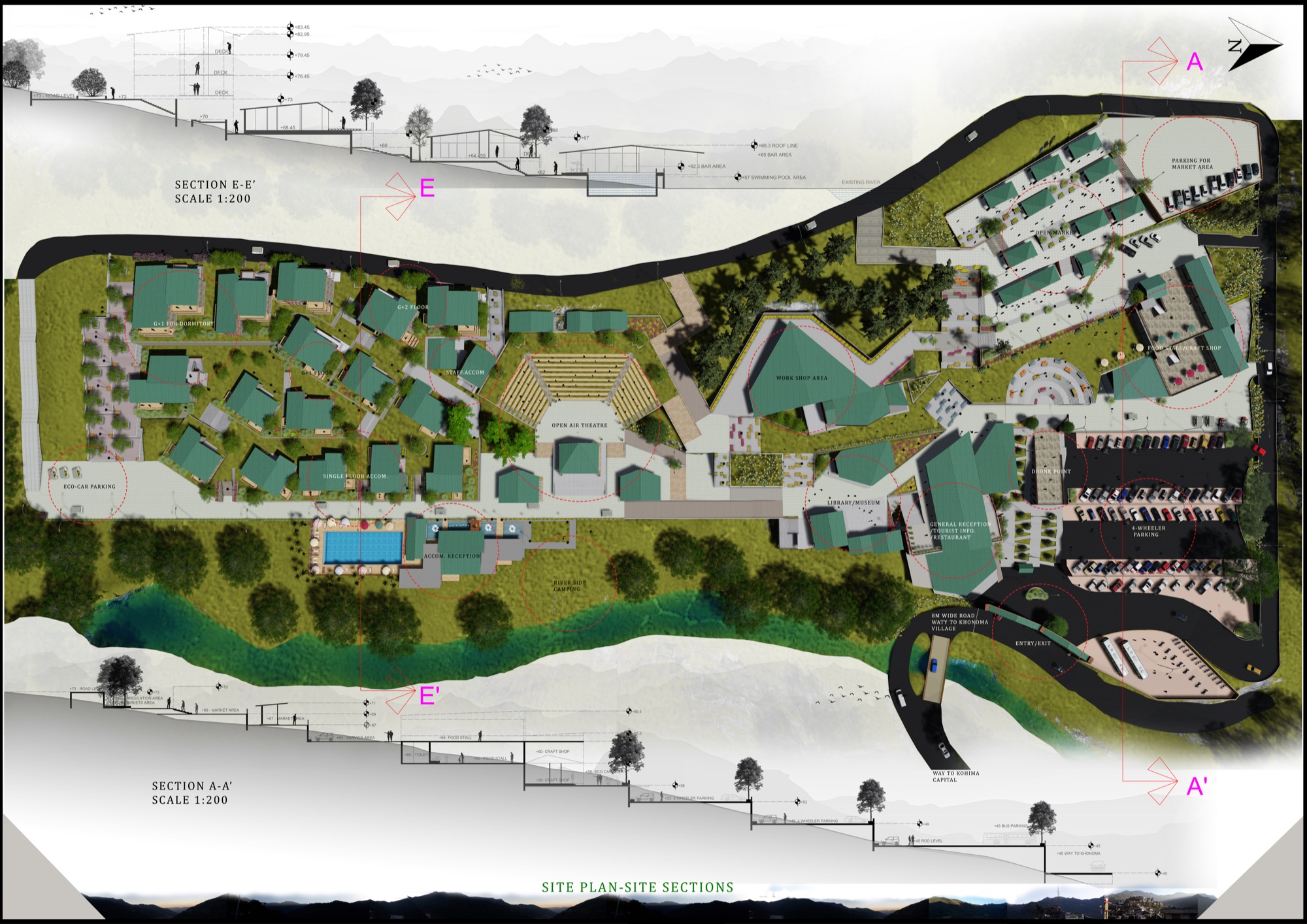
To illustrate the application of the architectural framework, the thesis develops a design proposal for a hypothetical eco-tourism project in a specific ecological context. This proposal demonstrates how the principles and strategies outlined in the framework can be integrated into a cohesive and sustainable design.
Site Context: A Degraded Coastal Ecosystem
The design proposal focuses on a degraded coastal ecosystem, characterized by erosion, pollution, and loss of biodiversity. The project aims to restore the ecological integrity of the site while providing opportunities for sustainable tourism and community development.
Design Concept: A Regenerative Eco-Lodge
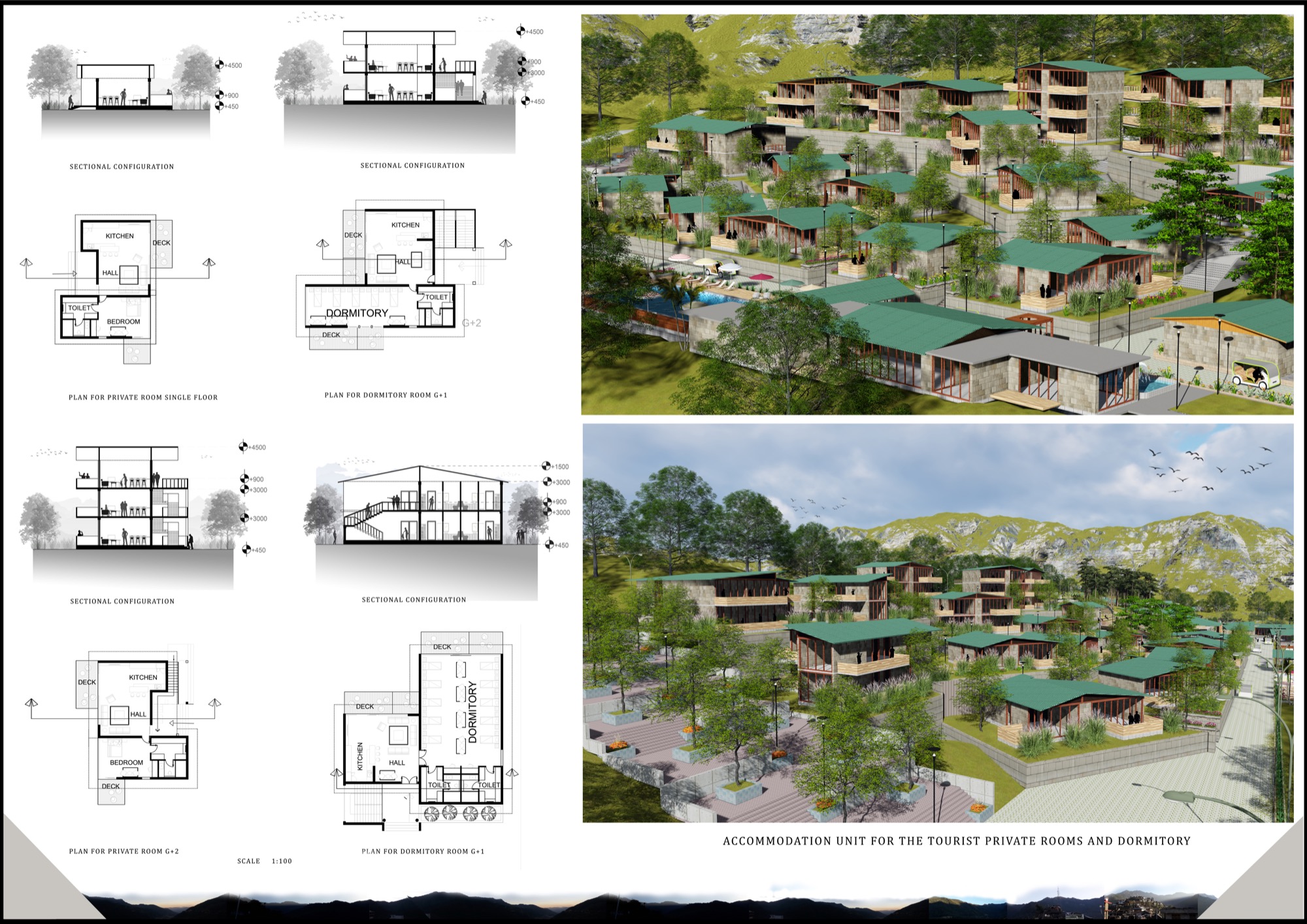
The design concept is a regenerative eco-lodge that functions as an integral part of the coastal ecosystem. The lodge is designed to minimize its environmental footprint while providing a unique and immersive experience for visitors.
Architectural Features: Integrating Nature and Technology
The lodge is constructed using locally sourced bamboo and timber, minimizing embodied energy.
This thesis has explored the potential of eco-tourism architecture to create symbiotic relationships between humans and the natural environment. By prioritizing ecological regeneration, community empowerment, and experiential learning, eco-tourism projects can contribute to a more sustainable future.
The architectural framework developed in this thesis provides a roadmap for designing eco-tourism projects that go beyond minimizing environmental impact, actively contributing to ecological restoration and social well-being. It is a call for architects to embrace a regenerative design ethos, working in partnership with nature and local communities to create built environments that enhance the vitality of our planet.
The future of tourism must be one of responsible stewardship, where travel enriches both the visitor and the visited. Eco-tourism architecture, when guided by principles of regenerative design, can play a pivotal role in realizing this vision. By creating symbiotic sanctuaries, we can foster a deeper understanding and appreciation for the natural world, inspiring a global movement towards sustainable living.


